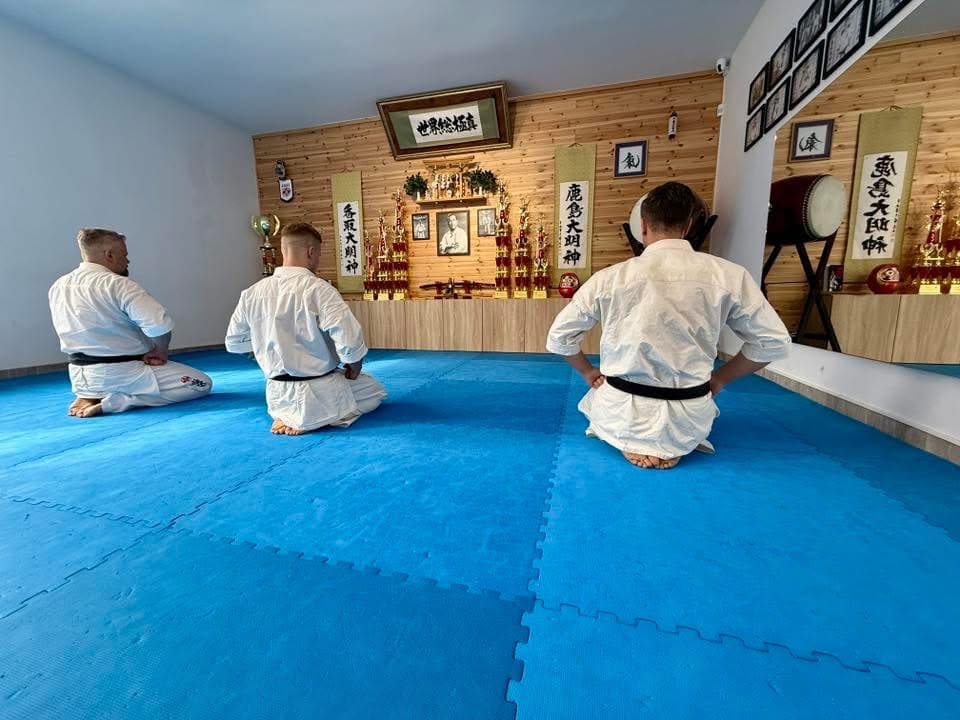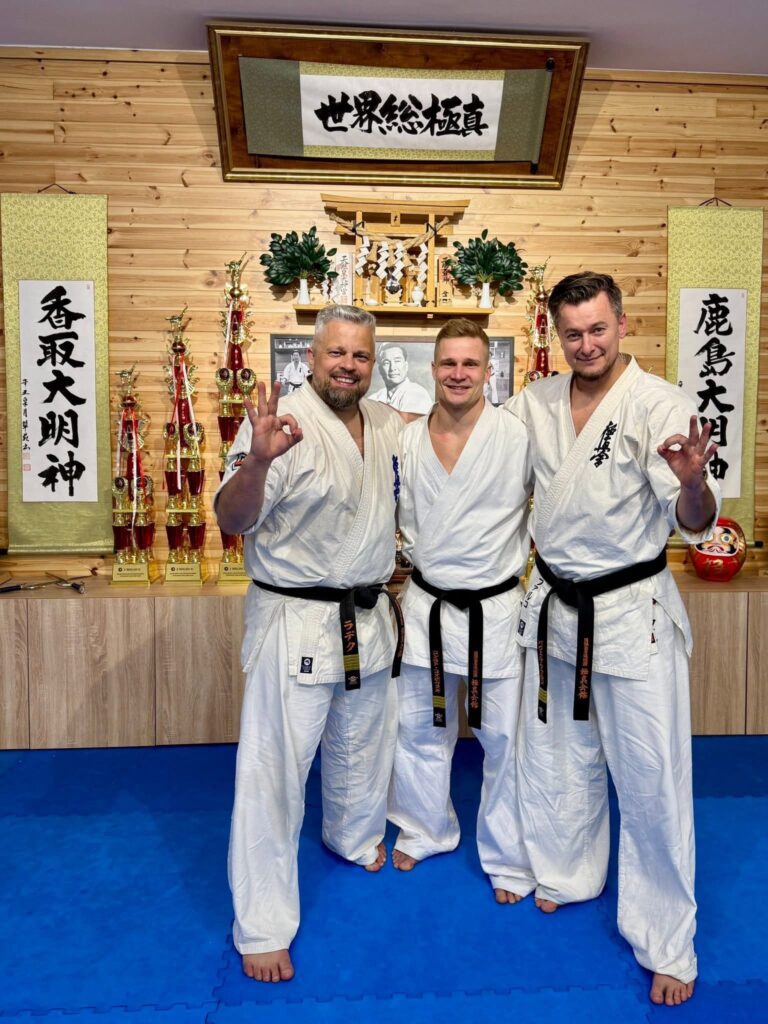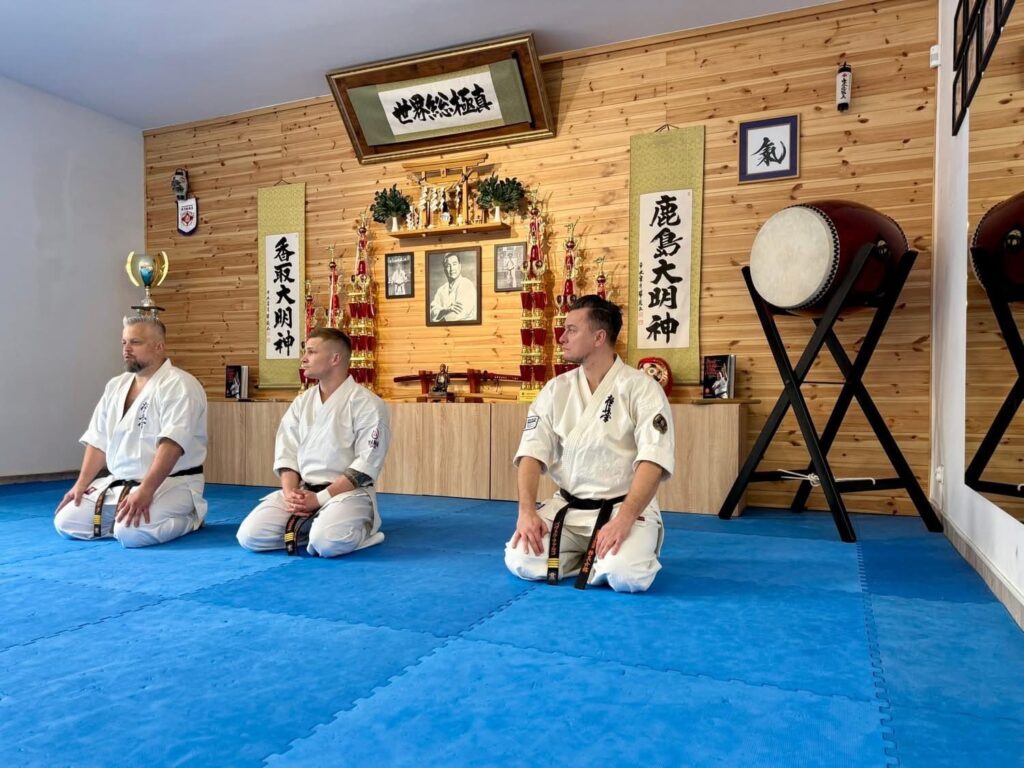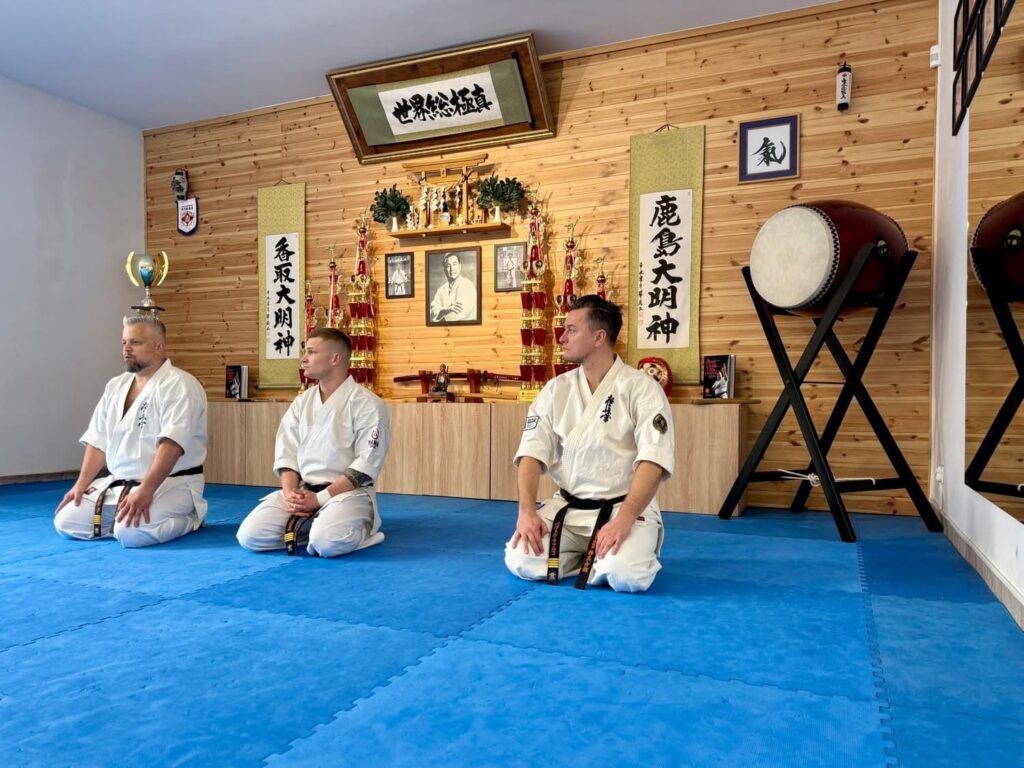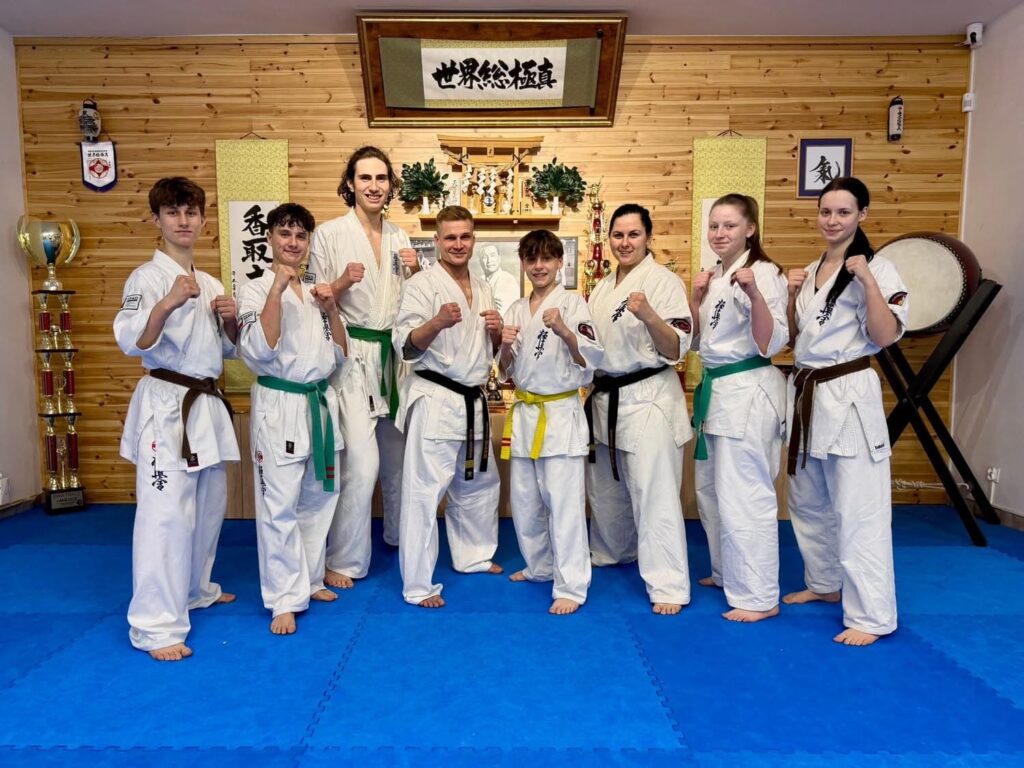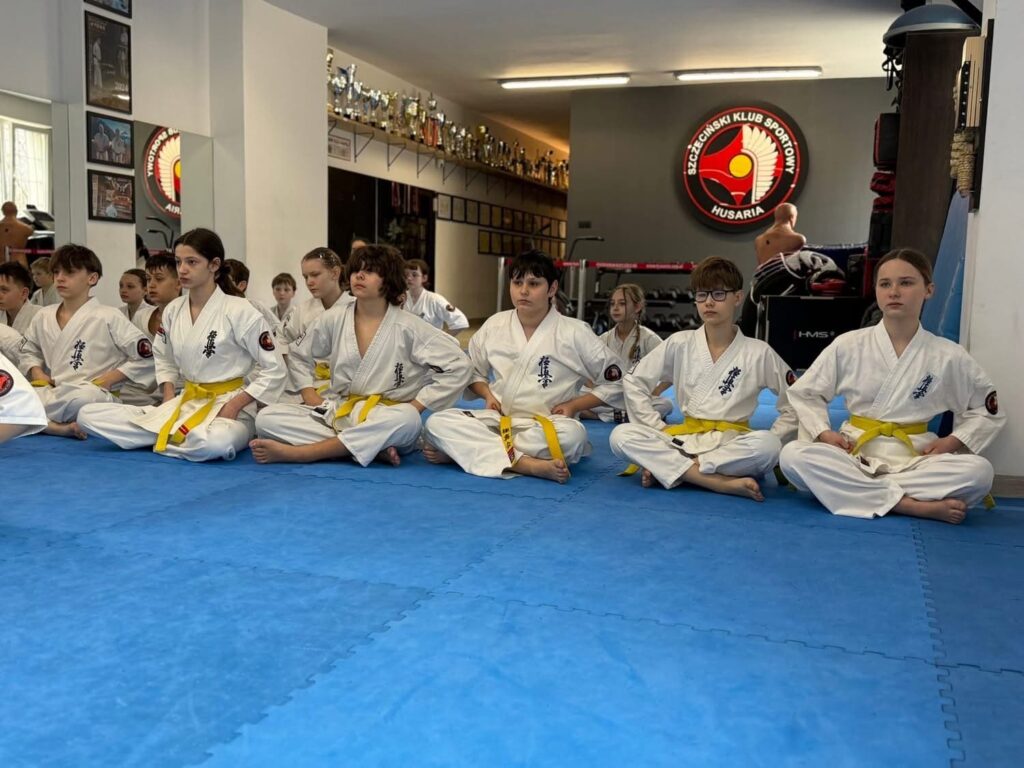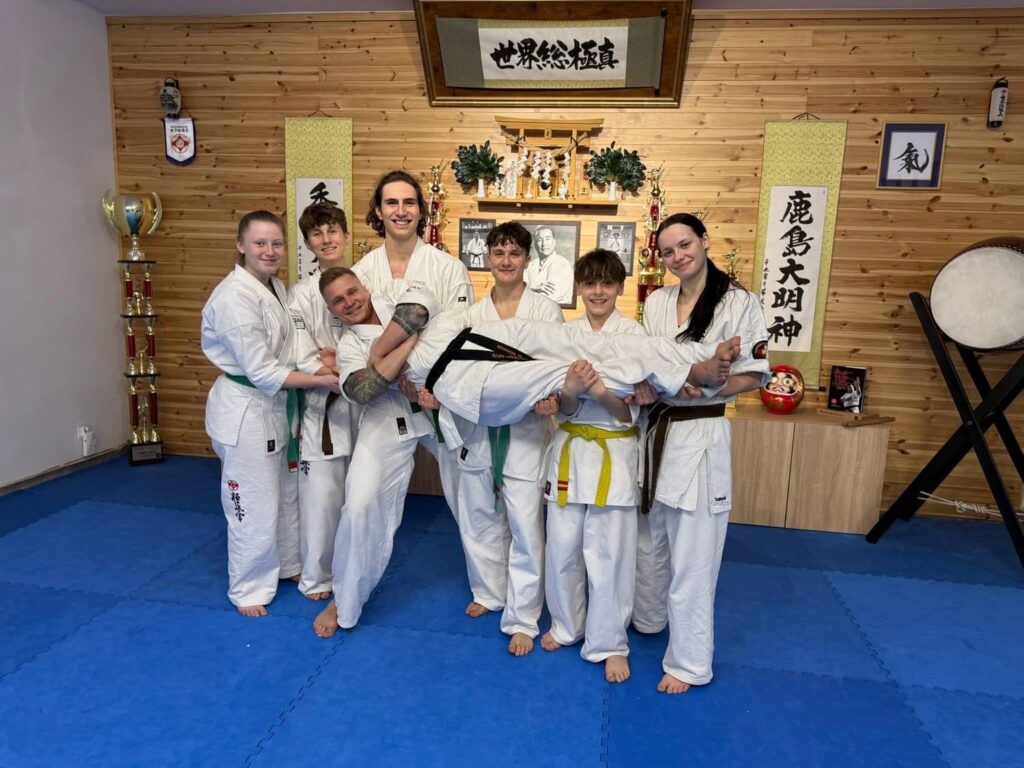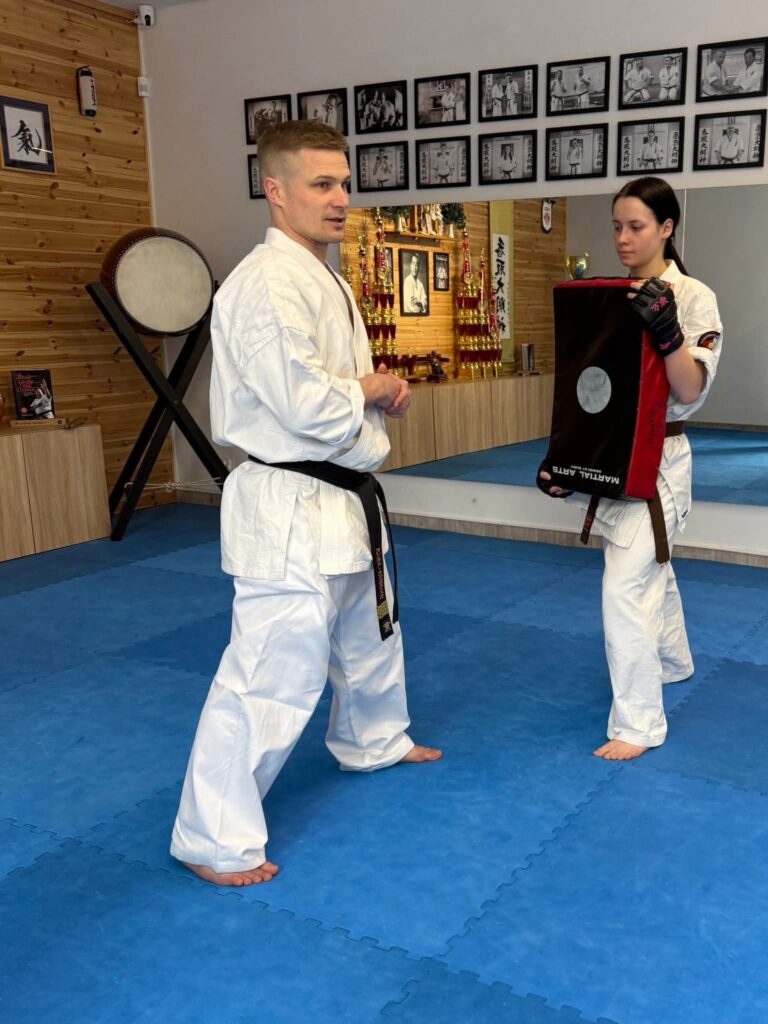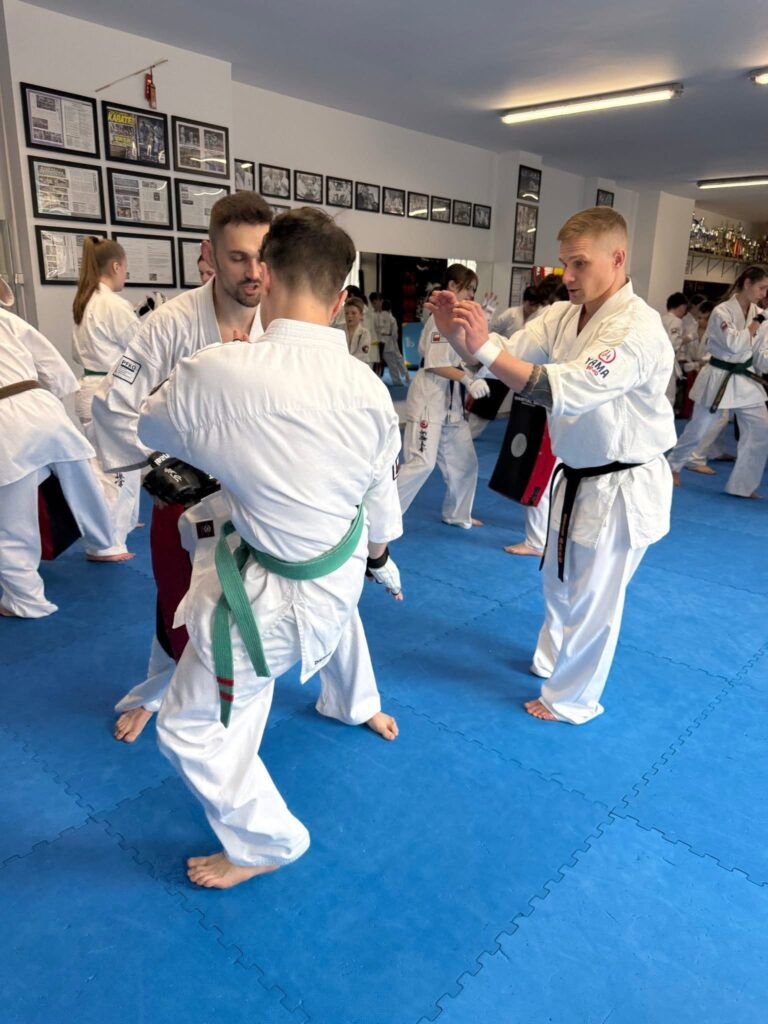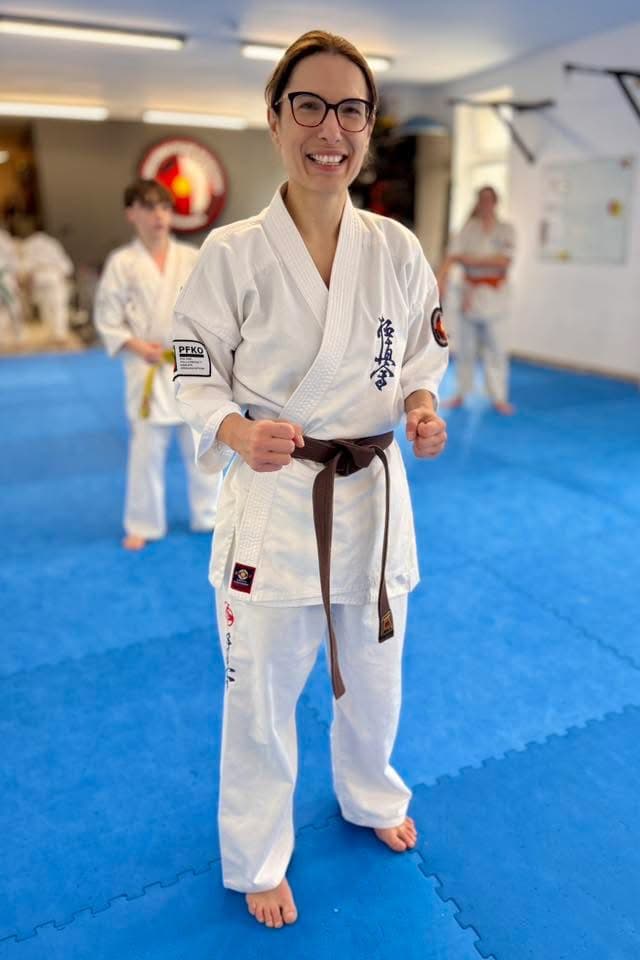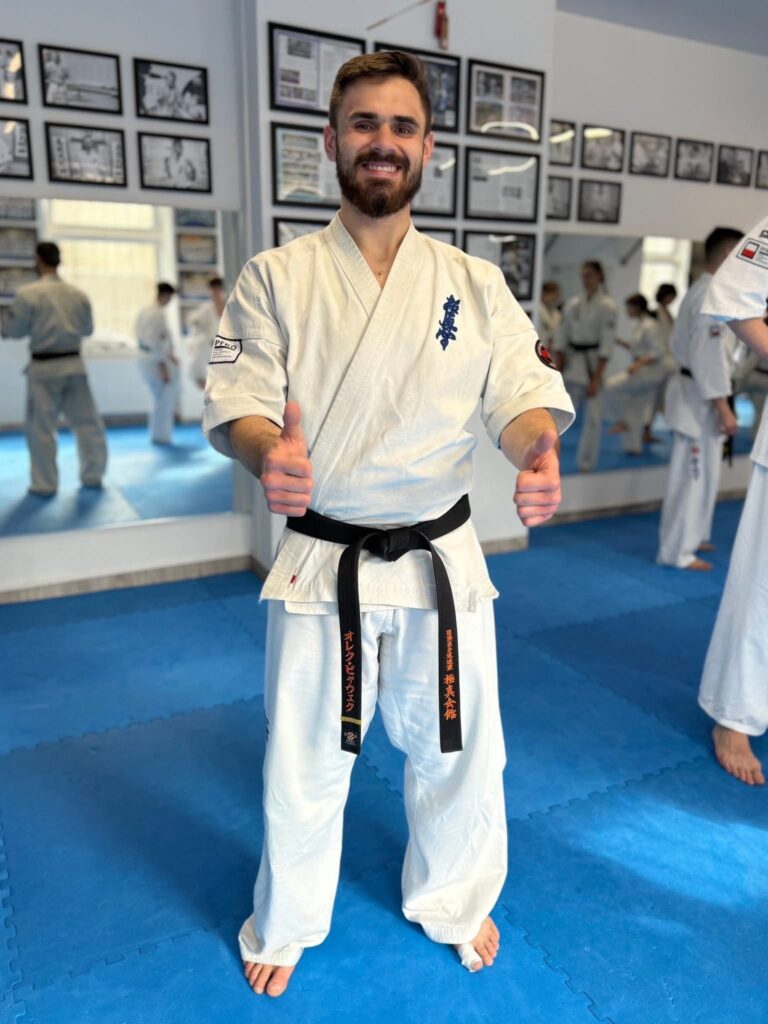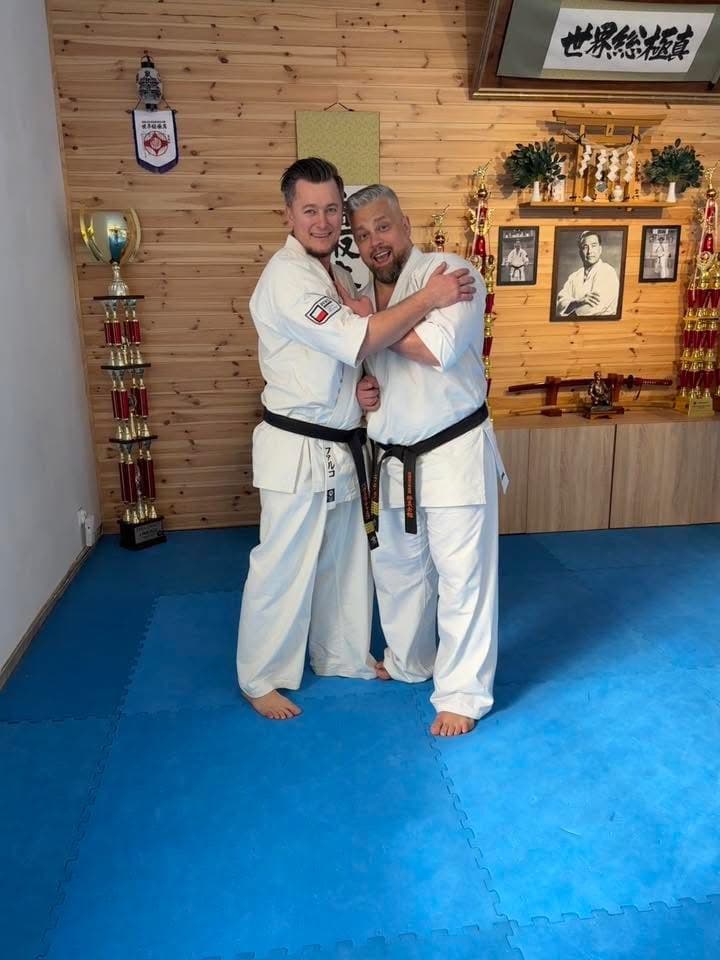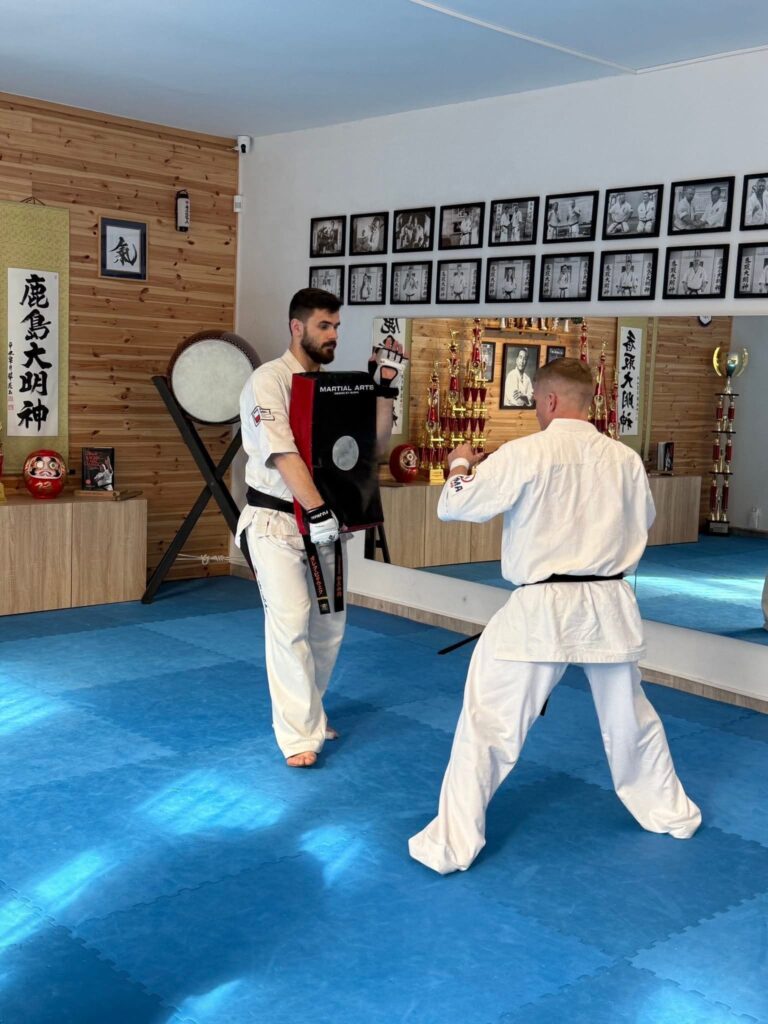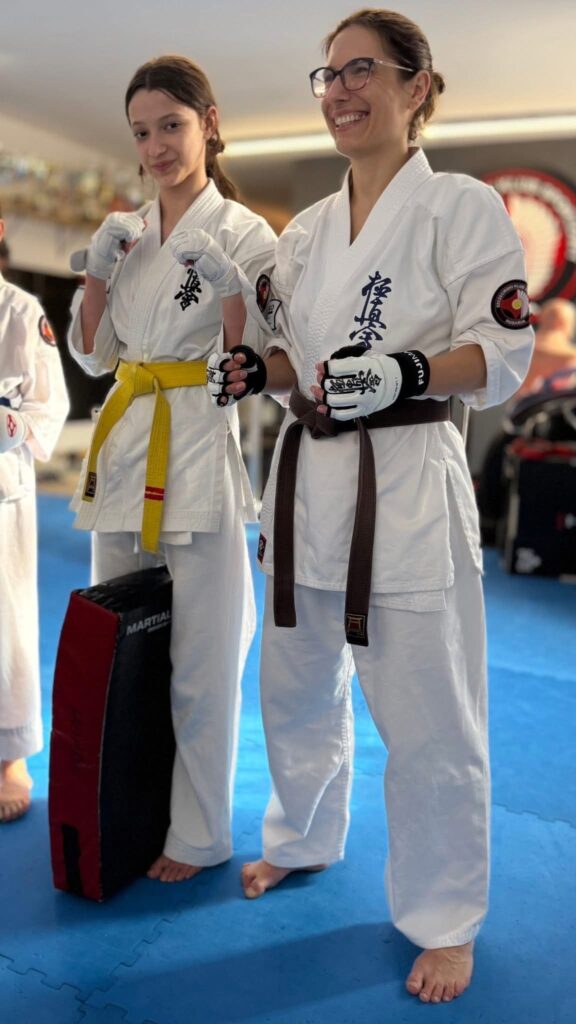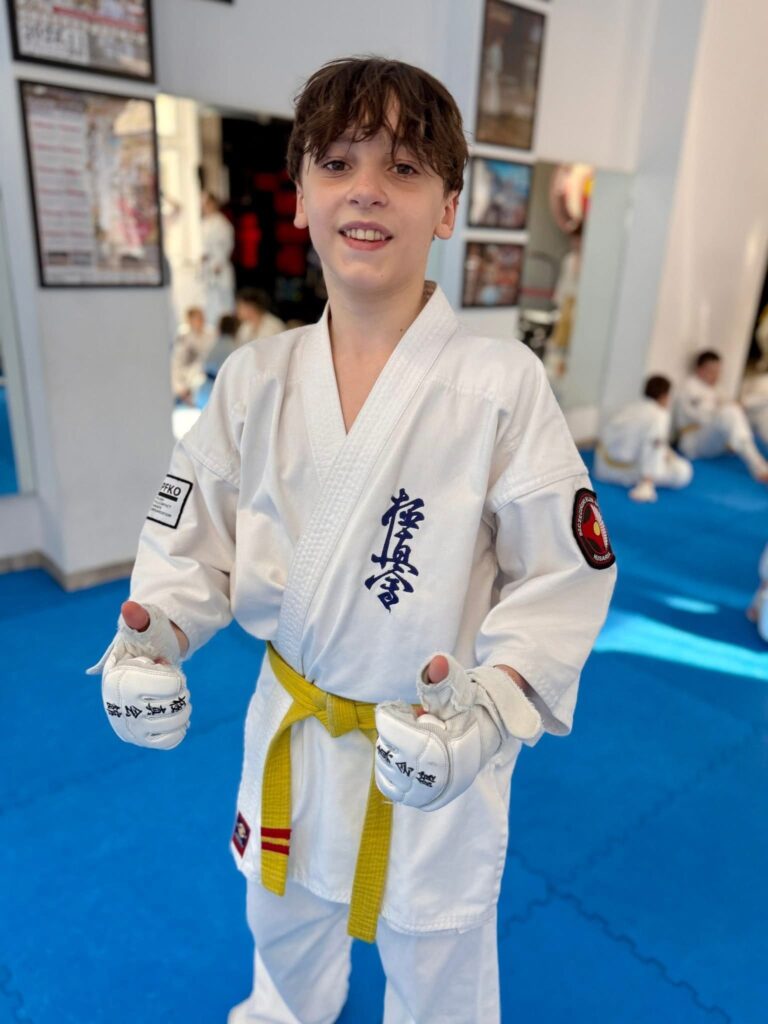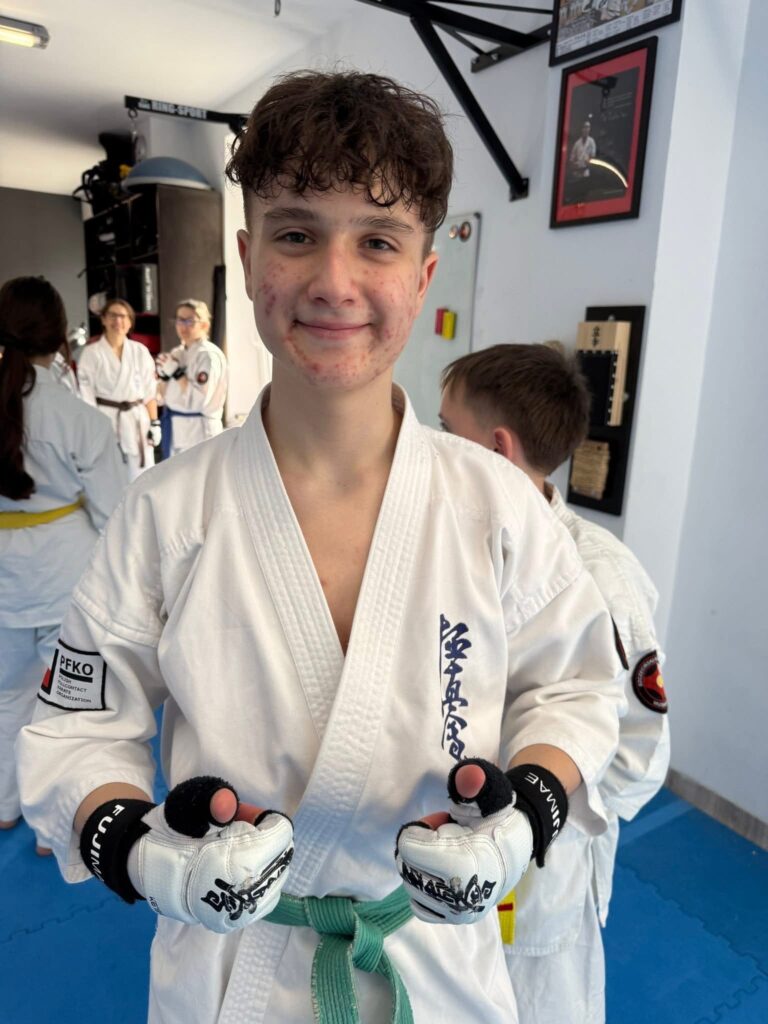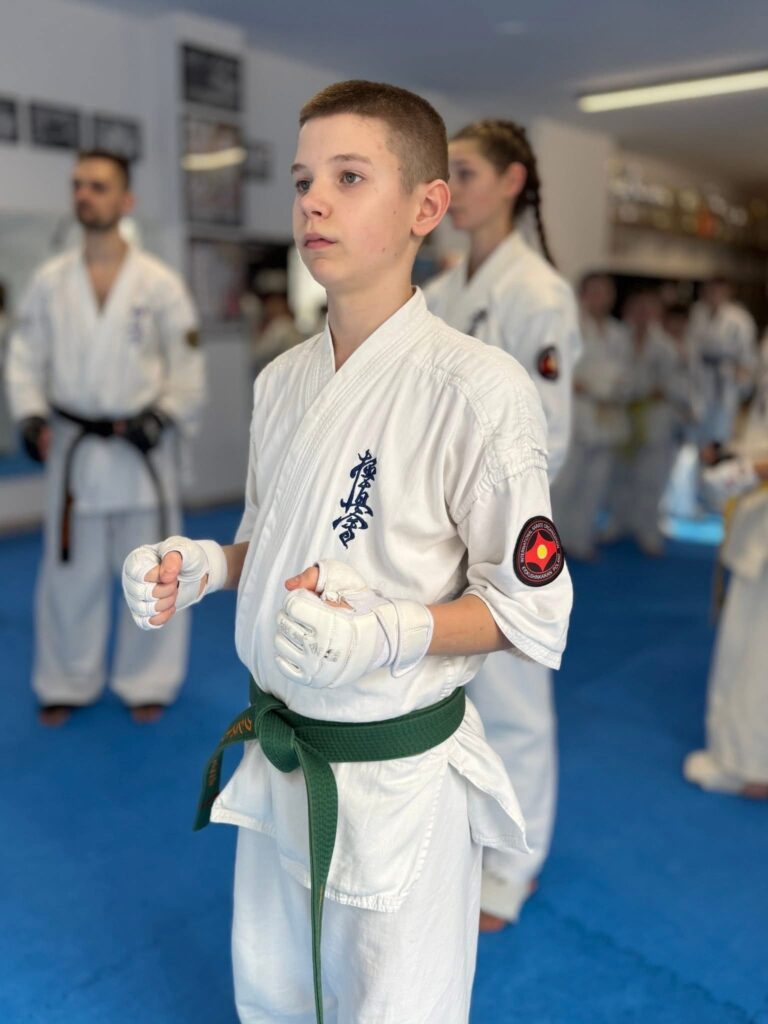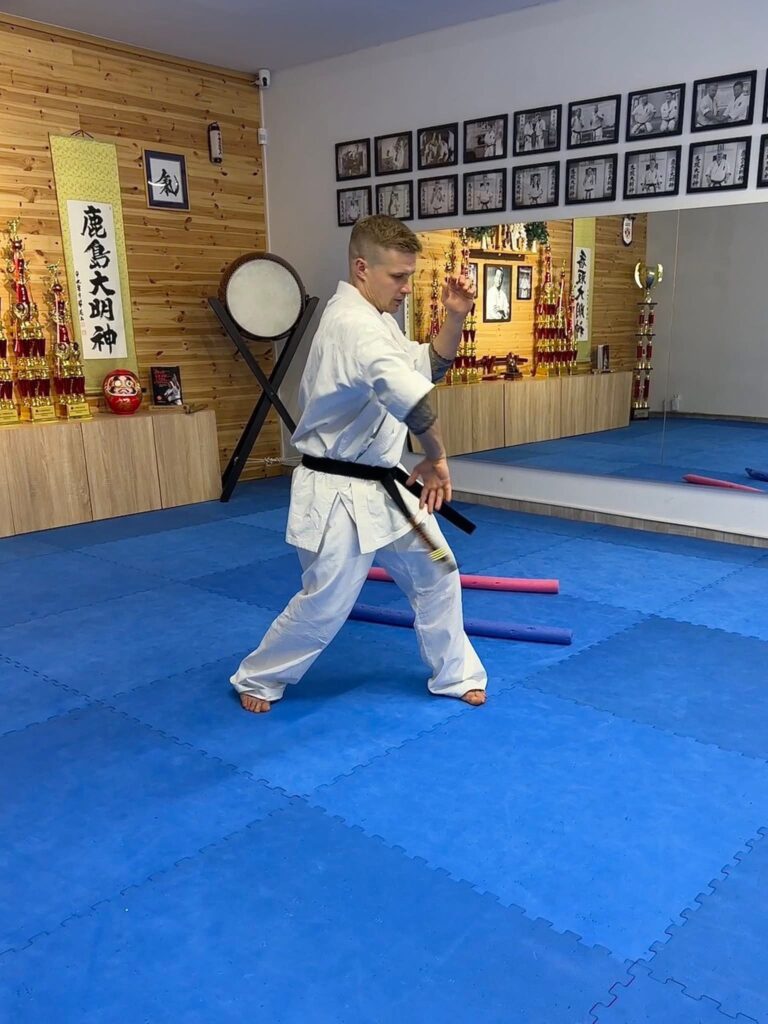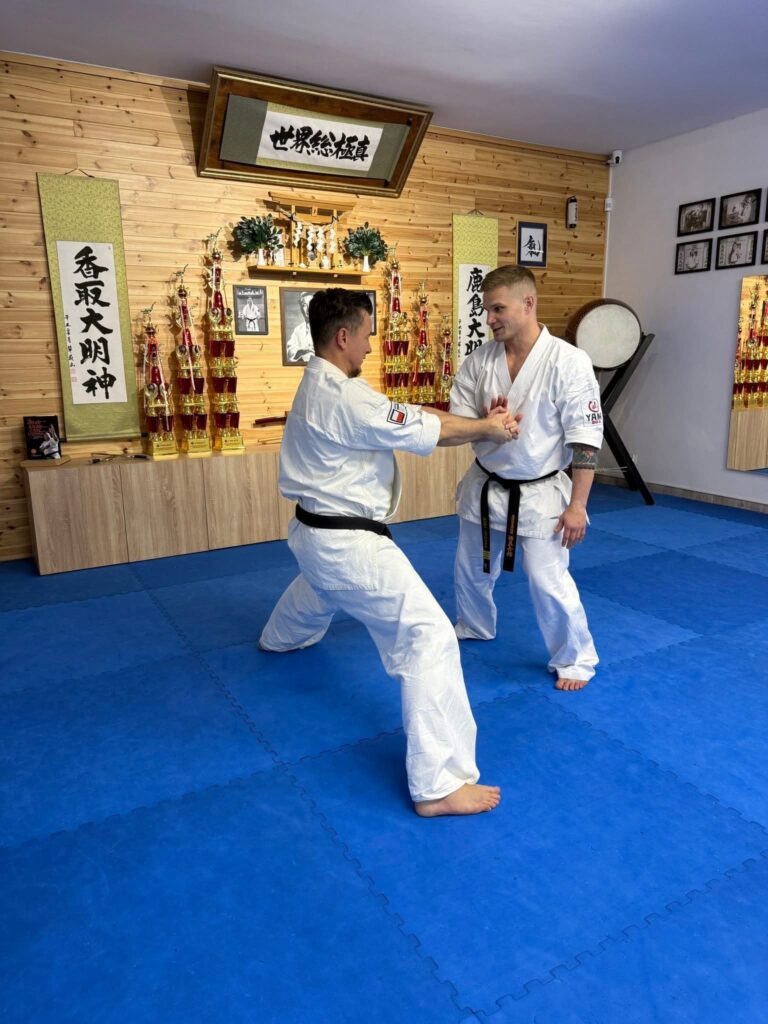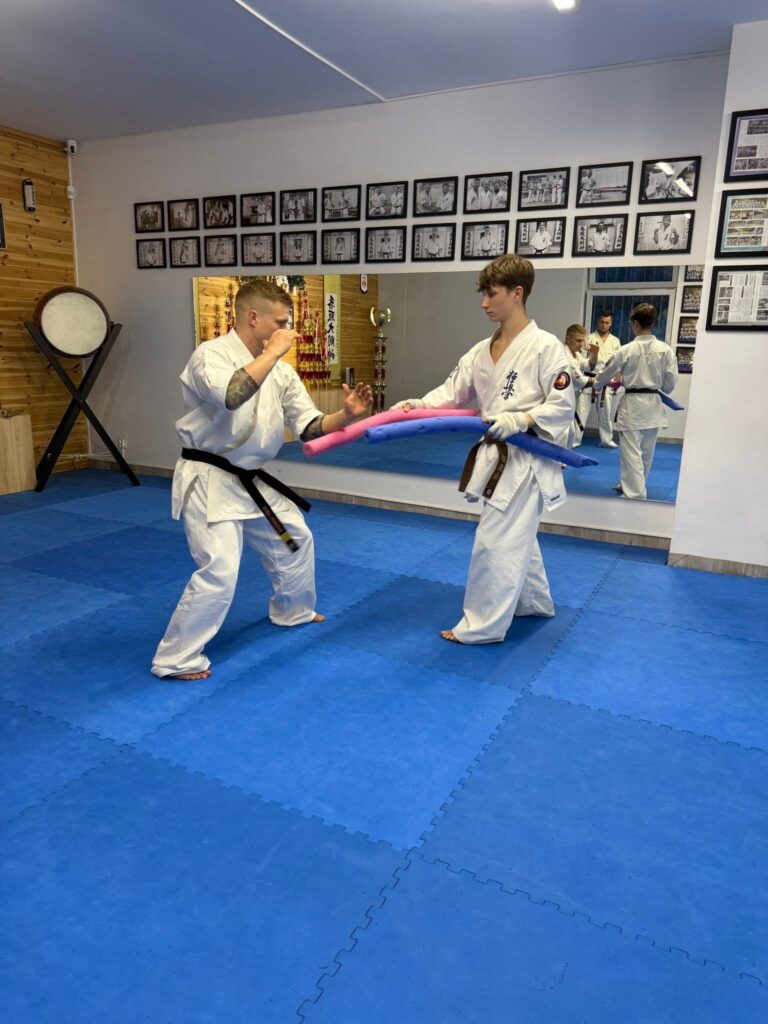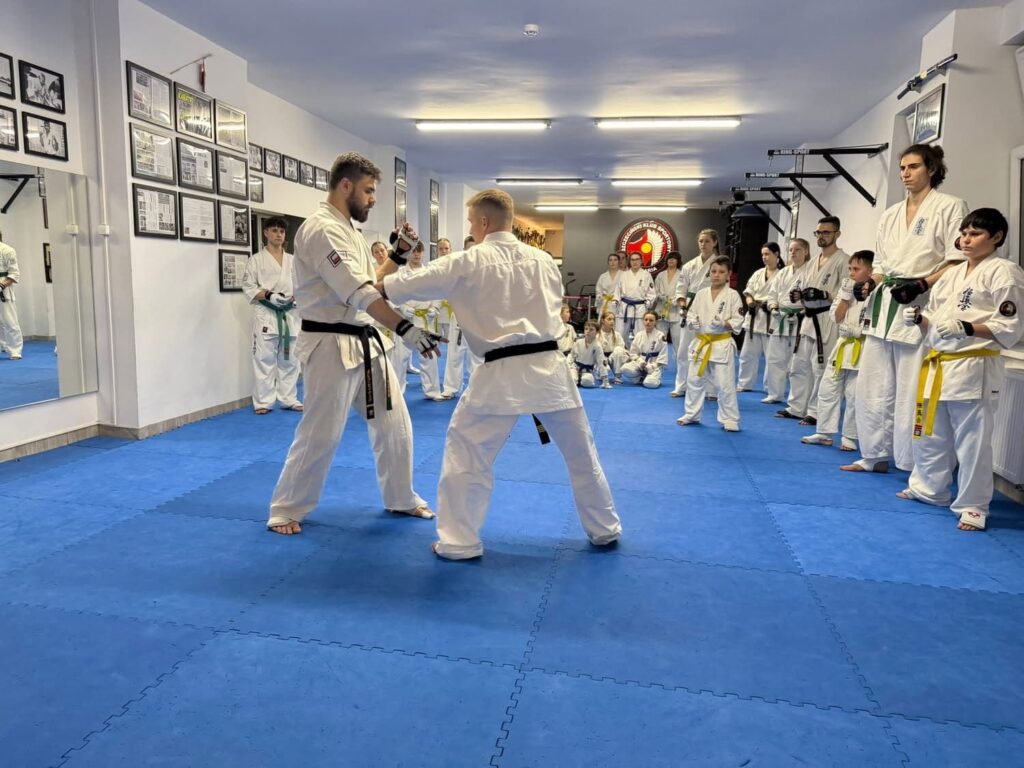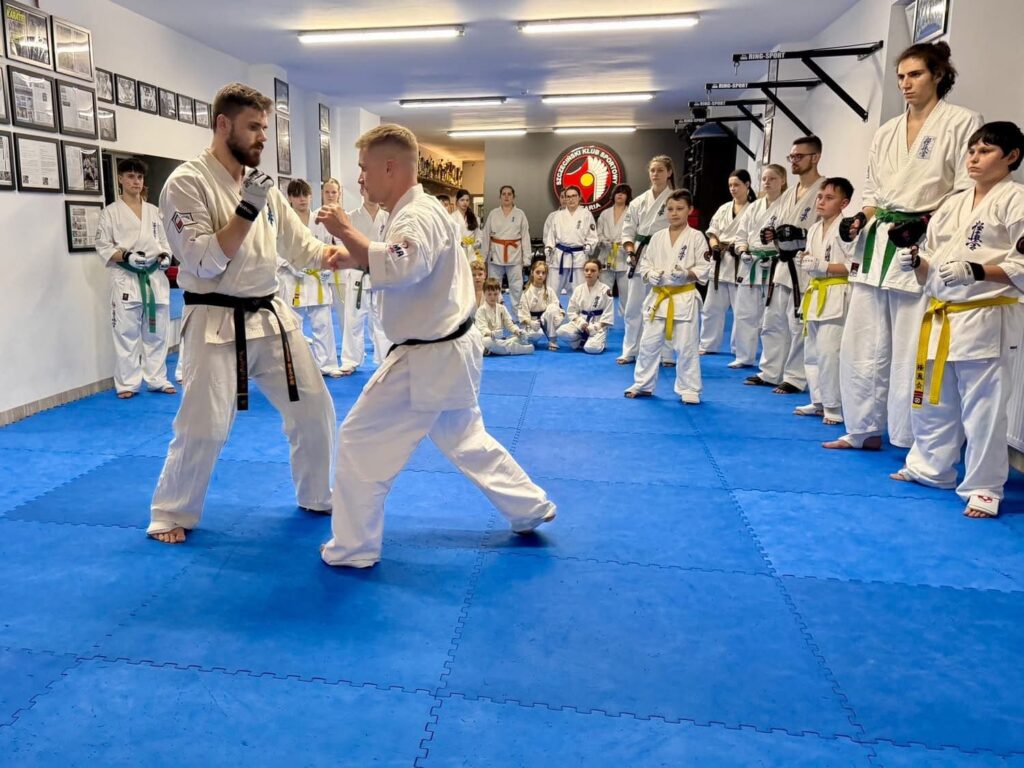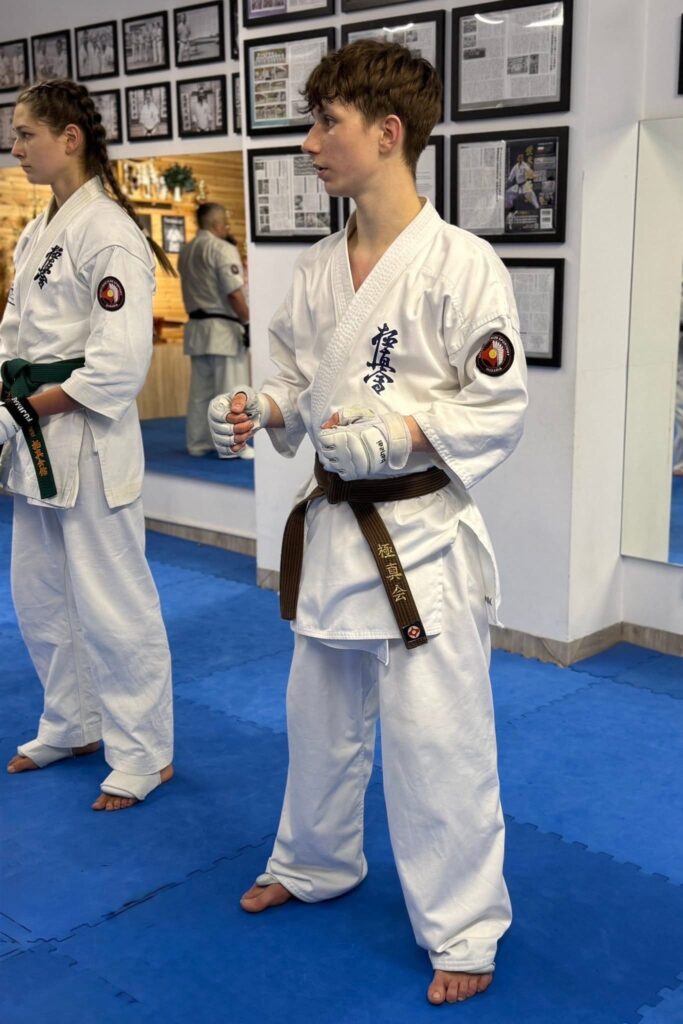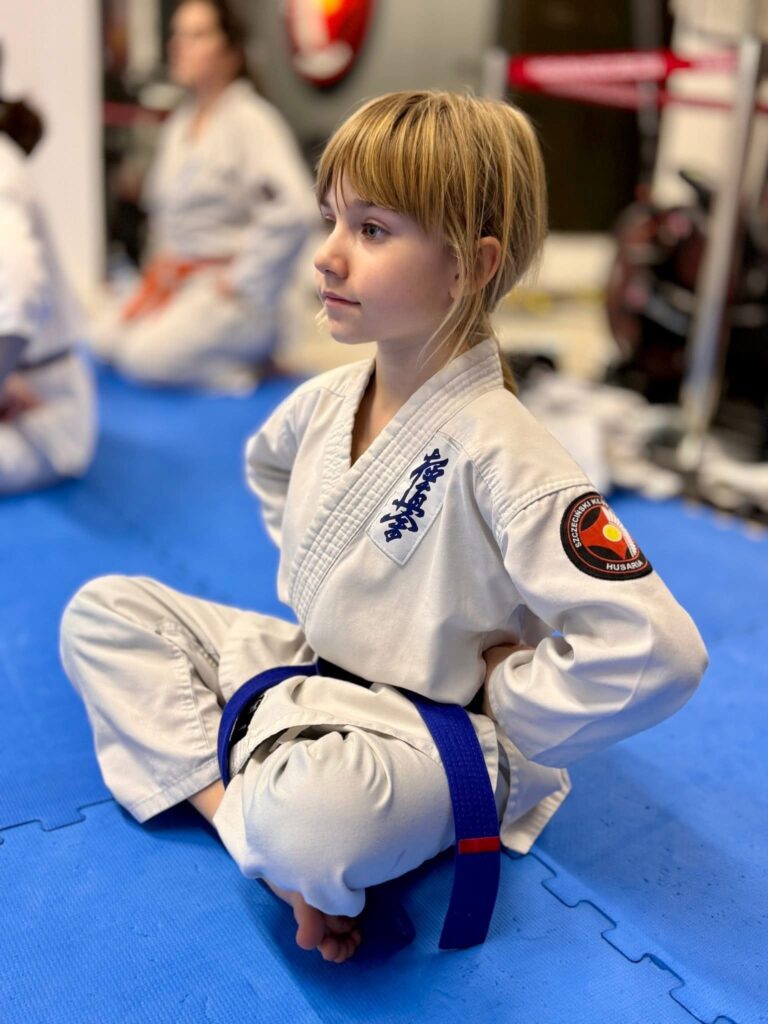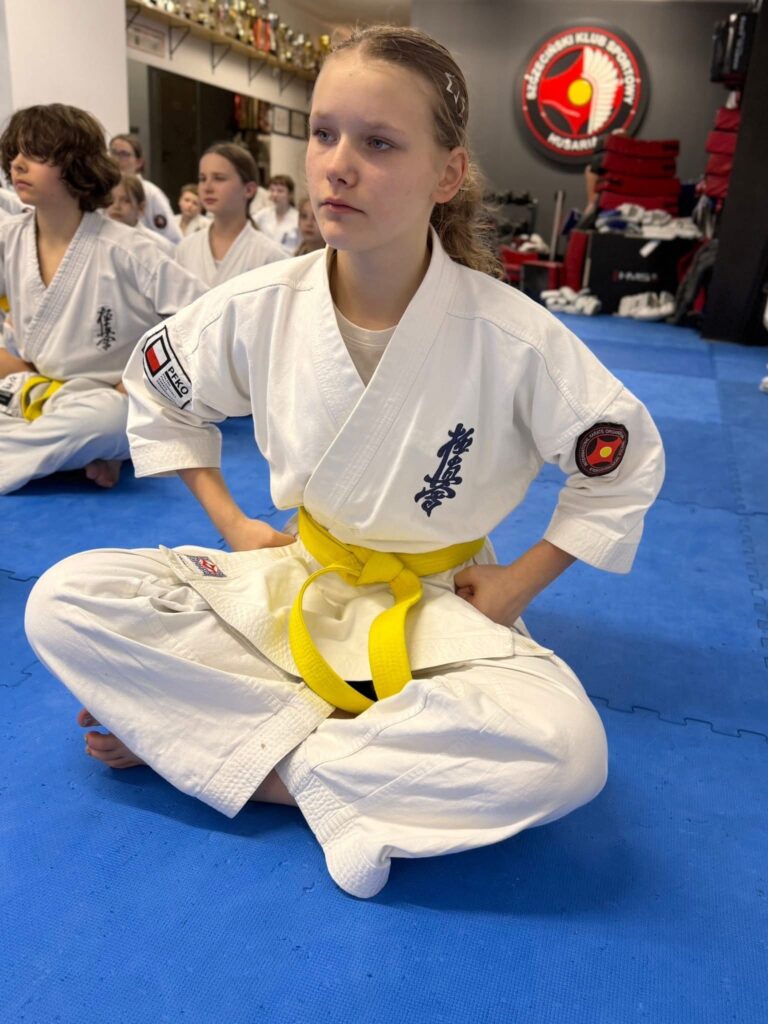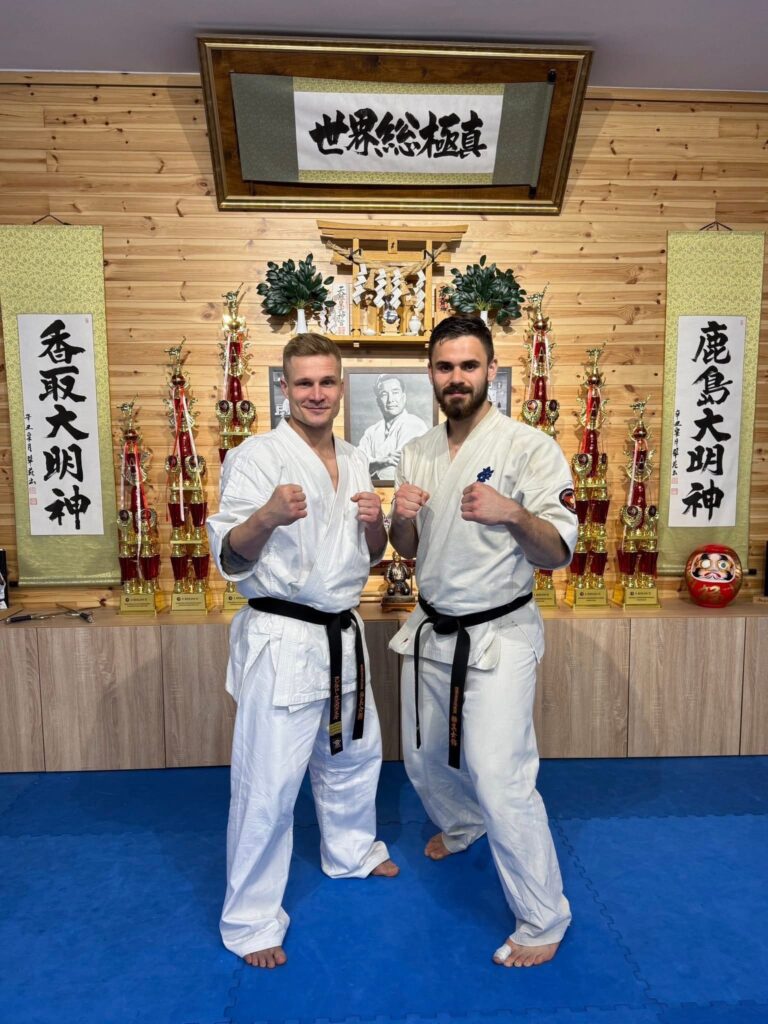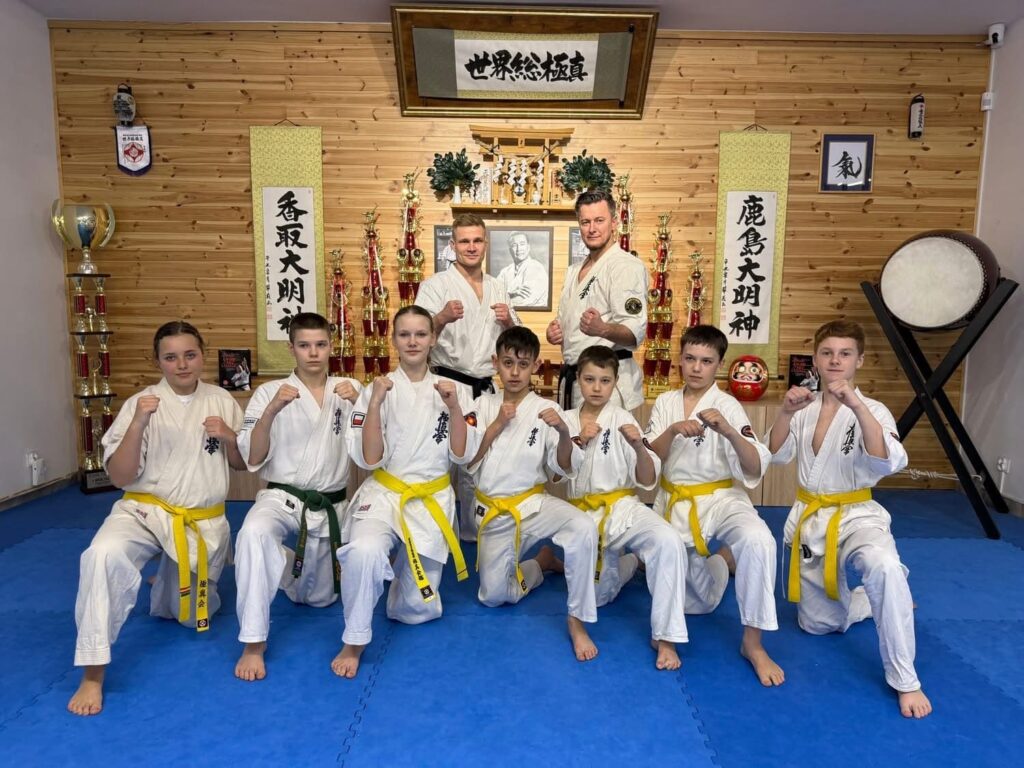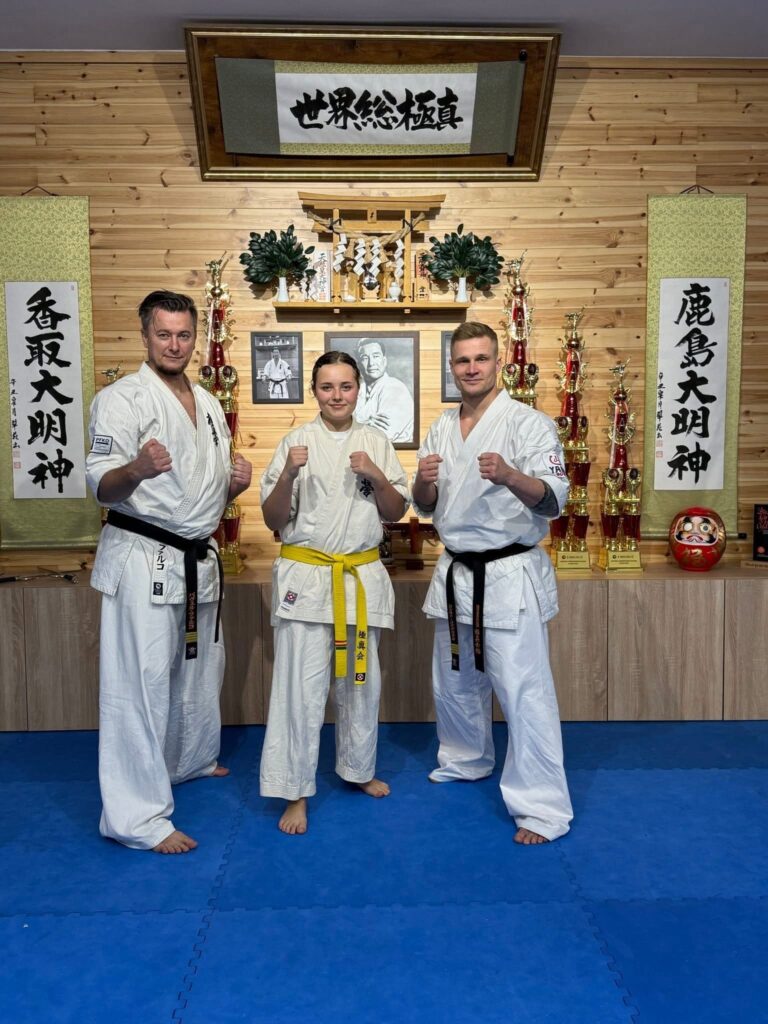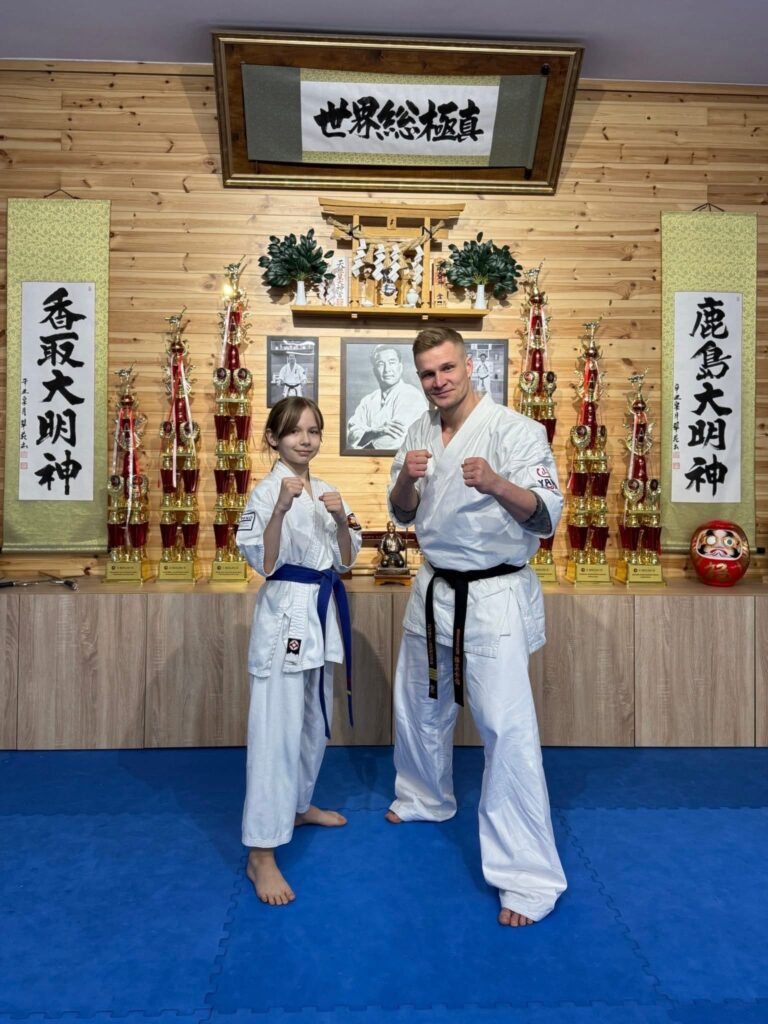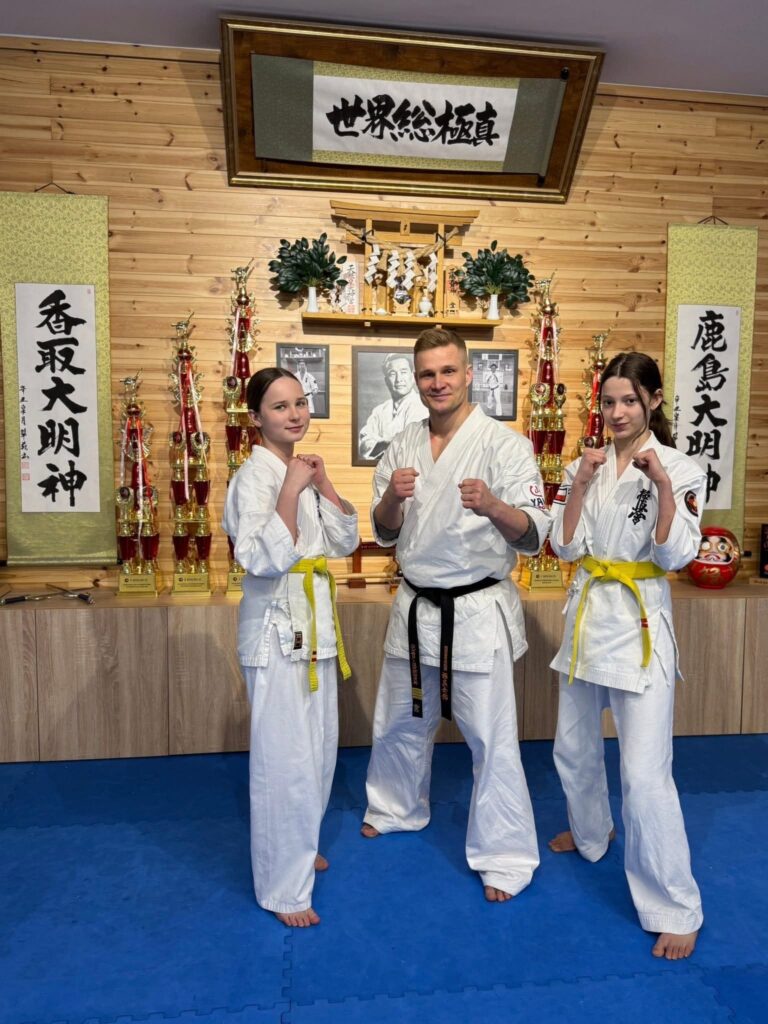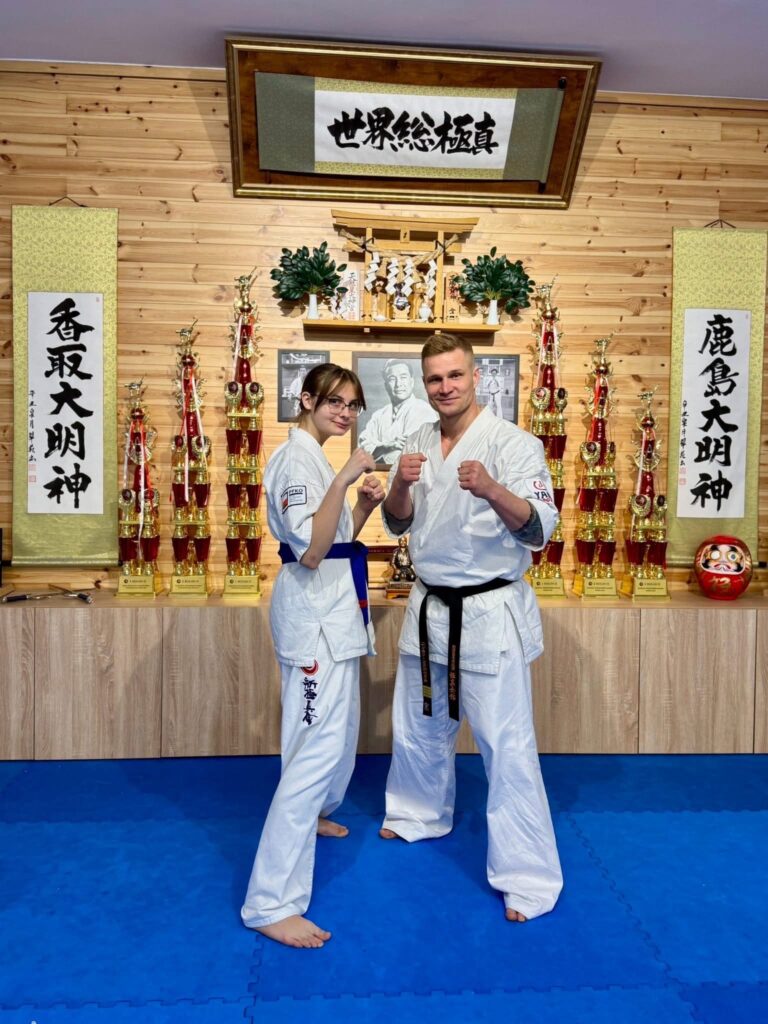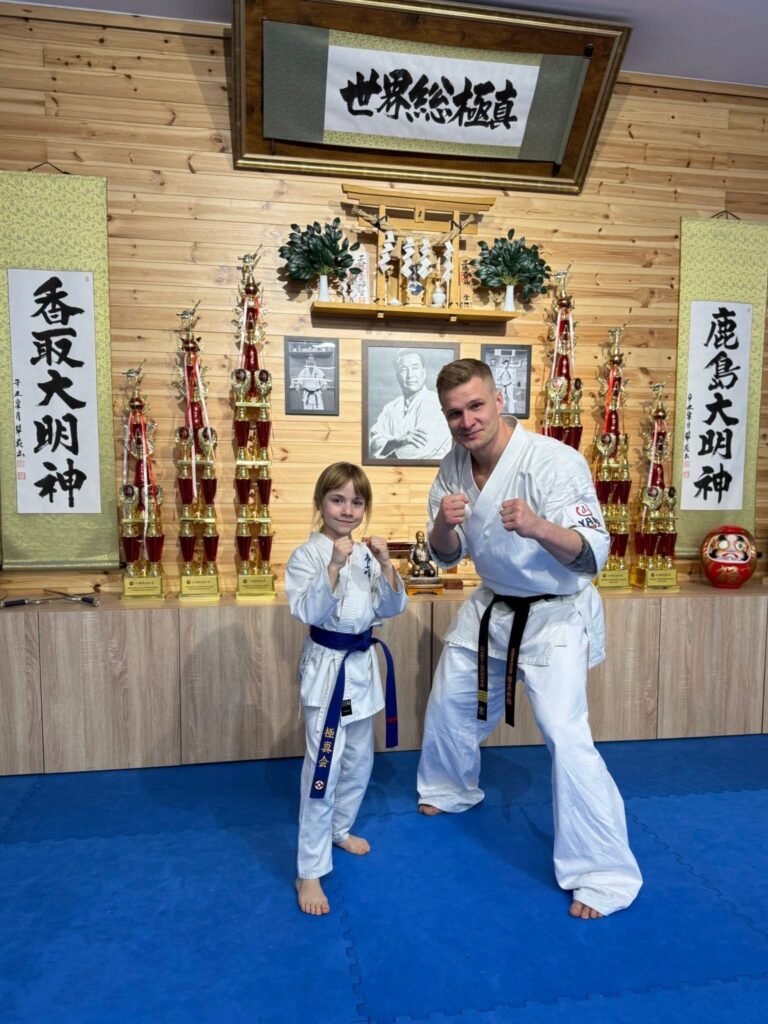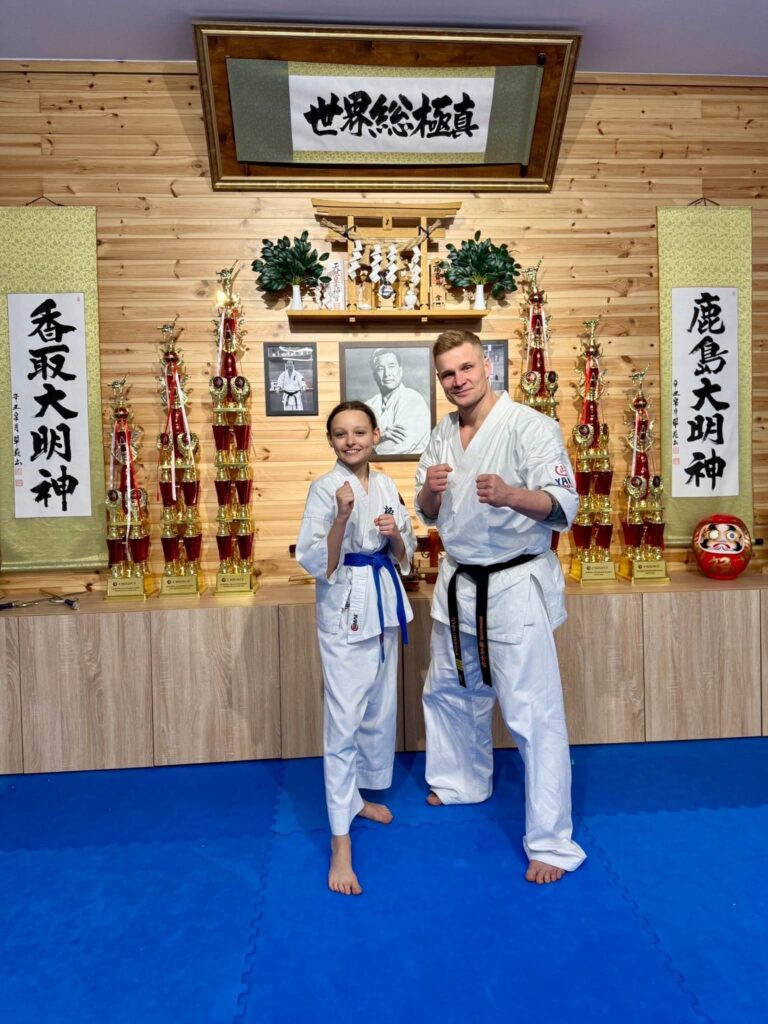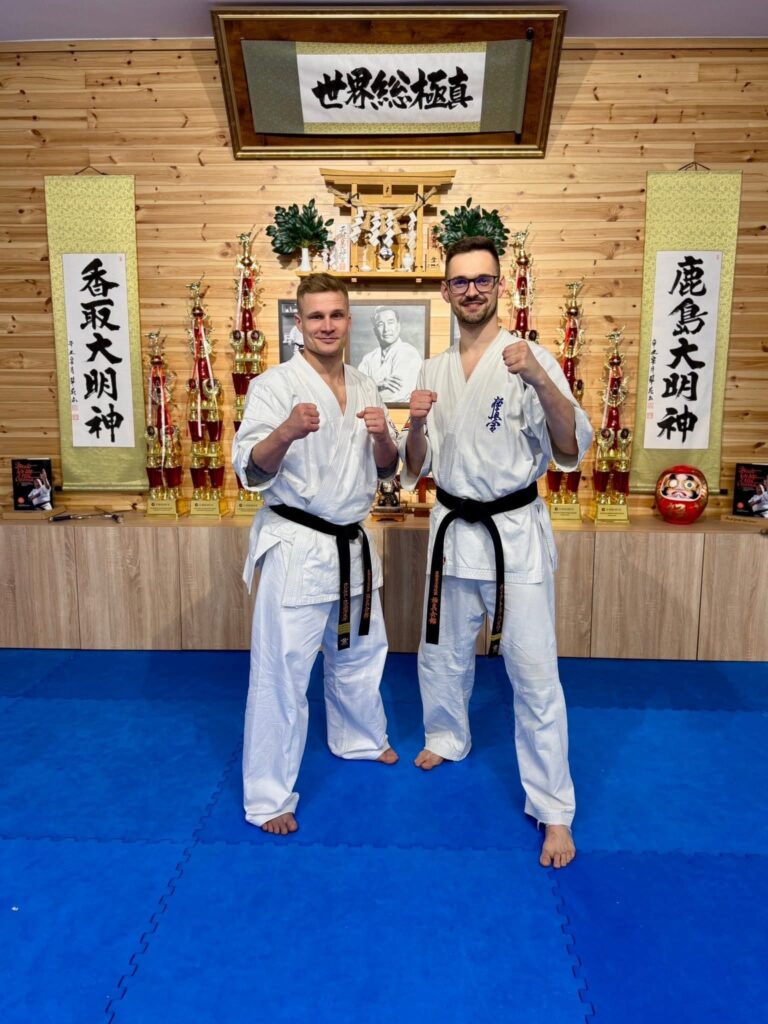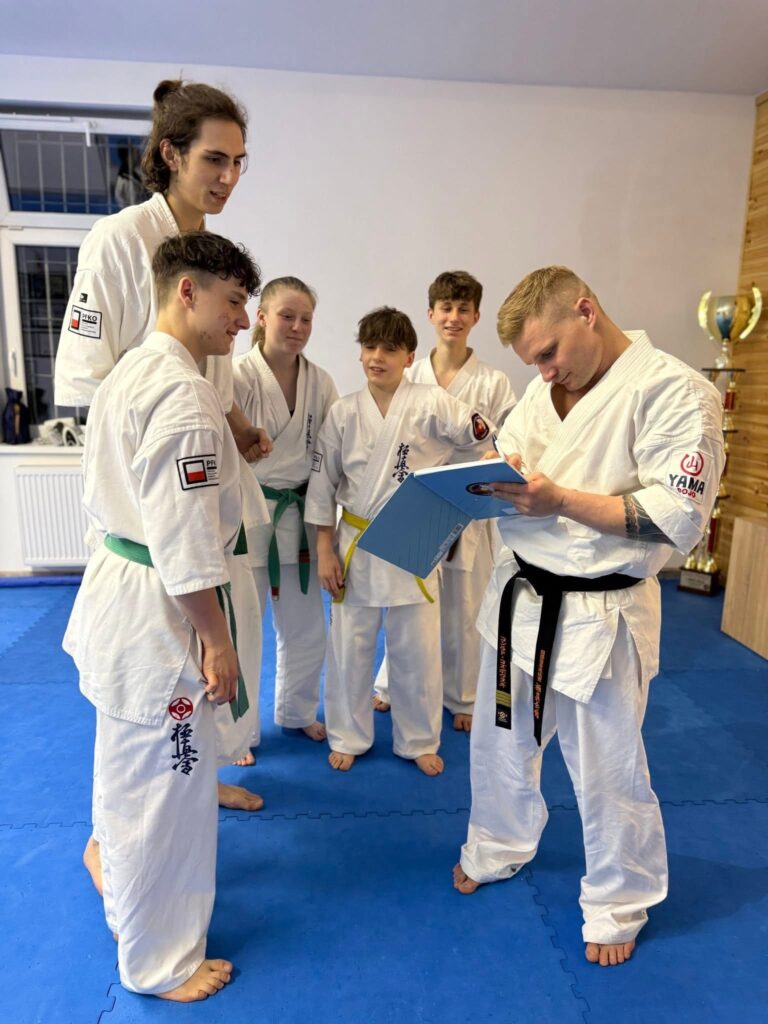

On March 14, 2026, the Husaria Szczecin Dojo, led by Shihan Radek Ambroziak, hosted a unique seminar on kumite, led by Sensei Konrad Kozubowski from the YAMA Dojo, Opole. It was an exceptionally valuable keiko event, during which participants had the opportunity to train under the guidance of an experienced instructor and explore fighting from a variety of technical and mental perspectives.
The seminar attracted many karateka eager for knowledge and development. From the very beginning, the atmosphere was full of energy, focus, and sporting spirit. Three intensive keiko sessions were held throughout the day, each dedicated to a different approach to fighting. Sensei Konrad presented the concept of three fighting styles – Fire, Water, and Earth – which represent different strategies for conducting kumite. This allowed participants not only to practice specific techniques but also to understand the philosophy behind different fighting methods.
Fire Style – Pressure and Initiative
The first keiko was dedicated to Fire Style, which symbolizes aggression, dynamism, and the constant exertion of pressure on the opponent. During this keiko, the participants’ primary task was to take the initiative in combat and dictate their own pace.
The exercises focused on dynamic approaches to distance, quick offensive actions, and the smooth integration of techniques into combinations. Sensei Konrad placed particular emphasis on continuity of attack, decisiveness, and the courage to take the initiative. Karateka learned to maintain pressure on their opponent and not allow them to develop their own actions freely.
Fire Style requires great energy, determination, and a strong mentality. The keiko demonstrated the importance of controlling the pace of combat and the ability to react quickly and capitalize on emerging attack opportunities.
Water Style – Movement, Distance, and Adaptation
The second keiko introduced a completely different approach to combat – Water Style. Unlike the aggressive Fire strategy, the emphasis here was on fluid movement, working from a distance, and intelligent use of timing.
During keiko, participants practiced continuous movement, evasions, position changes, and controlling the space between fighters. Sensei Konrad emphasized the importance of cunning, flexibility, and the ability to adapt to the opponent’s style.
Karateka learned to change the rhythm of the fight, deceive their opponent, and look for moments to effectively respond with a counterattack or a quick attack.
This training primarily developed fluidity of movement, distance awareness, and the ability to adapt to dynamically changing combat situations.
Earth Style – Stability and Composure
The third keiko was dedicated to Earth Style, which symbolizes stability, patience, and inner peace. A solid stance, a strong foundation, and the ability to wait for the right moment to act play key roles in this approach.
During keiko, participants worked on a stable stance, center of gravity control, and effective counterattacks. Sensei Konrad emphasized the importance of maintaining a calm mind even in intense combat situations.
The karateka practiced patience and composure – instead of reacting immediately, they learned to observe their opponent, analyze their movements, and only then capitalize on their mistakes. Earth Style demonstrated that not only speed and strength are crucial in kumite, but also the ability to control emotions and strategic thinking.
At the conclusion of the seminar, participants had the opportunity to summarize all three fighting styles. We compared their advantages, limitations, and the situations in which they can be most effective. This allowed each participant to better understand the diversity of kumite approaches and the importance of combining different strategies depending on the opponent and the situation.
The conclusions from the seminar will undoubtedly be applied in daily keiko, helping participants develop both their technical skills and tactical awareness during combat.
The seminar was not only an opportunity for intensive training but also for meeting and integrating the karate community. We are extremely pleased that members of Dojo Buntai Kołobrzeg, led by Sensei Paweł Falko, also participated in the event. Training together, sharing experiences, and getting to know each other on the mat created a unique atmosphere of true dojo spirit.
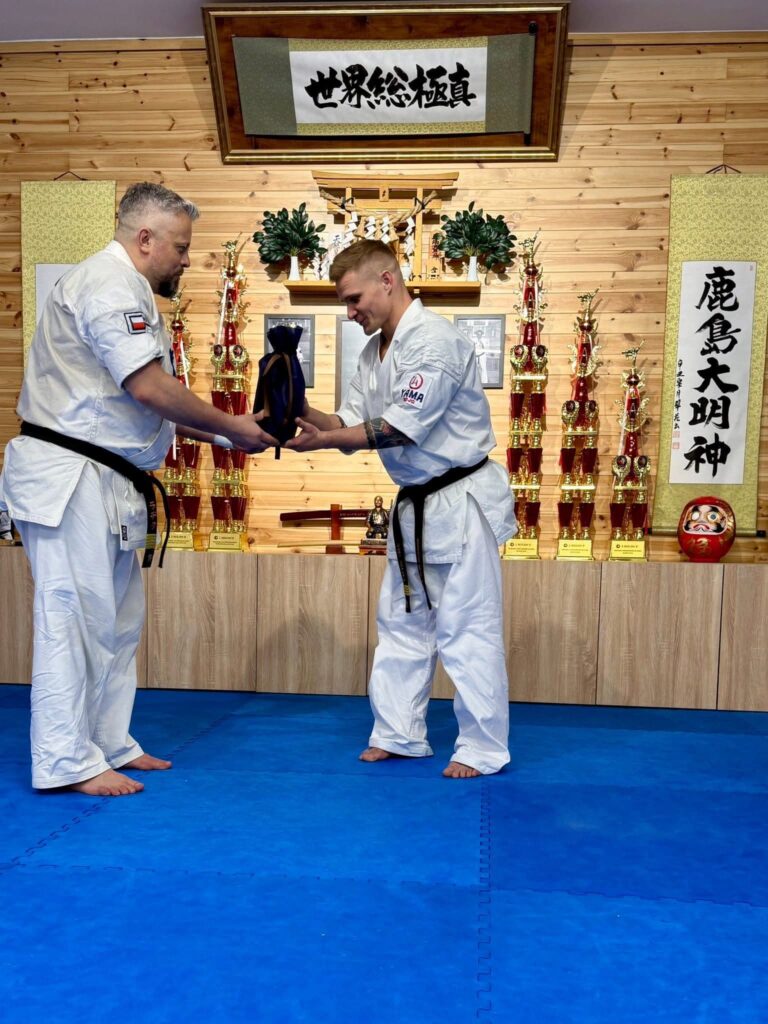
We sincerely thank Sensei Konrad Kozubowski for the excellently conducted classes, the wealth of knowledge he imparted, and the inspiration for further personal development. We also extend our thanks to Sensei Paweł Falko and all the members of his dojo for coming and spending time training together.
It was a day full of intense work, inspiration, and karate spirit, which will long remain in our hearts. OSU!